Imagine I get a WhatsApp from a Canggu villa owner: "I've been trying to fix this leak for two weeks. Bought three different sealants. Nothing works." When I arrive, the issue is immediately clear — it's a slow weep from a PPR joint behind a tiled column. No sealant in existence works on a pressurised PPR joint. The only fix is to cut the pipe, clean the ends, and re-fuse. The two weeks and three sealants were wasted because the wrong type of repair was attempted for the type of leak. This guide is about helping you identify what type of leak you have and what the correct approach actually is.
Step 1 – Identify the Type of Leak
Before doing anything, turn off the main supply valve and note whether the leak stops immediately or continues. This tells you a lot:
Stops immediately when supply is off: pressurised supply pipe leak. This could be a joint failure, pinhole corrosion, or fitting crack. Requires physical pipe repair — not sealant.
Continues after supply is off: either a gravity-fed line (from a rooftop tank with no valve on its outlet) or a drain/waste line. Gravity tank leaks can sometimes be temporarily stopped by reducing tank level. Drain leaks are about joint failure, root intrusion or cracked pipe sections.
Appears after rain: almost certainly not a plumbing leak — more likely a roof, wall or terrace waterproofing issue. Worth confirming before calling a plumber.
Step 2 – What You Can Actually Fix Yourself
Here's an honest list, because most online guides overstate what's DIY-realistic in Bali's building conditions:
Dripping tap: yes. A worn washer or O-ring. Requires the right replacement part (Bali hardware shops stock standard sizes), a shifter, and basic mechanical confidence. Shut off the supply to that tap, disassemble the tap head, replace the washer or cartridge, reassemble. 20 minutes.
Toilet running constantly: often yes. The fill valve float or flapper is usually the cause. Krisbow and ACE Hardware in Bali stock replacement sets for standard close-coupled toilets. If the toilet is an unusual imported design with non-standard internals, parts may not be available locally.
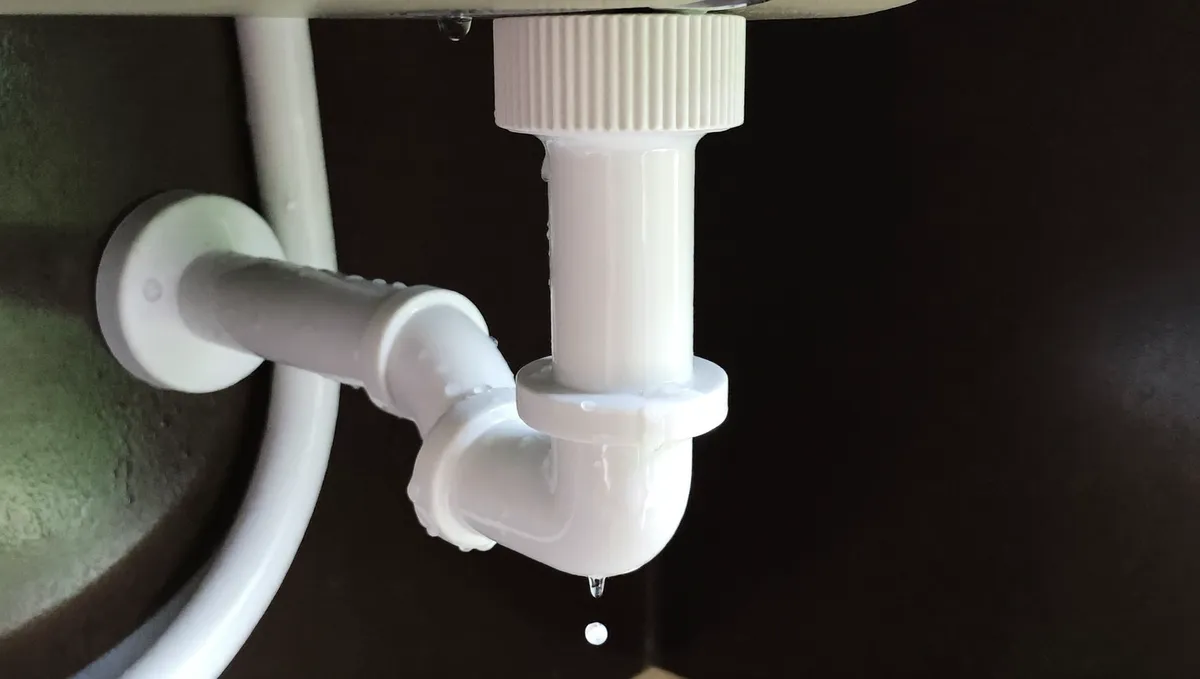
Loose drain fitting at sink: possibly. If the P-trap is a standard slip-joint plastic fitting, hand-tighten first. If it's leaking at a threaded connection, PTFE tape and retightening sometimes fixes it. If it's a solvent-welded joint that's failed — no, this needs replacing.
Anything inside a wall, floor or ceiling: no. Not because it's technically impossible, but because finding the actual fault location without pressure testing means guessing where to cut. The cost of being wrong — re-tiling, replastering — is usually much more than a plumber's call-out.
Step 3 – Typical Repair Approaches by Pipe Type
PPR (grey or green plastic, used for hot lines): joints are heat-fused and form a single continuous piece when done correctly. A failed PPR joint cannot be sealed — it must be cut out and re-fused. This requires a PPR fusion tool. The tool can be hired in Denpasar, but using it correctly on the first attempt requires some practice. For a single joint repair, a plumber is faster and cheaper than hiring the tool and potentially making multiple attempts.
PVC (white or grey plastic, cold supply and drainage): joints are solvent-welded. A failed solvent joint on a cold water line — particularly if it's accessible — can sometimes be cleaned and re-cemented if the surfaces are intact and dry. On a pressurised line, a patch is not a long-term fix; the section should be cut and replaced. Drainage PVC failures are more tolerant of patch repairs because the pipe is not under continuous pressure.
HDPE (black flexible pipe, outdoor runs): fittings are compression or electrofusion. Compression fittings can be disassembled and reassembled with a new seal if the pipe end is undamaged. Splits in HDPE pipe body — usually from root intrusion or mechanical damage — require section replacement.
Galvanised steel (older Bali builds): threaded joints can sometimes be re-sealed with PTFE tape and a pipe wrench. Pinhole corrosion through the pipe wall cannot be repaired — the section must be replaced, and if one section is corroding through, the rest of the run is probably close behind it.
When to Call Instead of Trying More
Three signals that it's time to stop and call:
First, if you've attempted a fix and it's still leaking or now leaking from a new point. This means either the fault location is different from what you thought, or the repair approach was wrong for the pipe type. Further DIY attempts usually add damage without fixing the cause.
Second, if the leak is inside a wall and you've already tried sealant or tape. These don't work on pressurised joints — you need access to the actual joint, which means opening the wall at the right location. Without pressure testing, every location is a guess.
Third, if the water bill has increased significantly with no obvious cause. This indicates a hidden leak large enough to flow continuously — possibly under the slab or in a buried garden line. These require pressure testing to locate and cannot be assessed by visual inspection.
Not Sure What You're Dealing With?
Describe the situation over WhatsApp — where the water appears, what the pipe type is if you can see it, and what you've already tried. We can often tell you over WhatsApp whether it's a DIY fix or needs a site visit, and what to try first. No charge for the advice.
Ask Us on WhatsApp