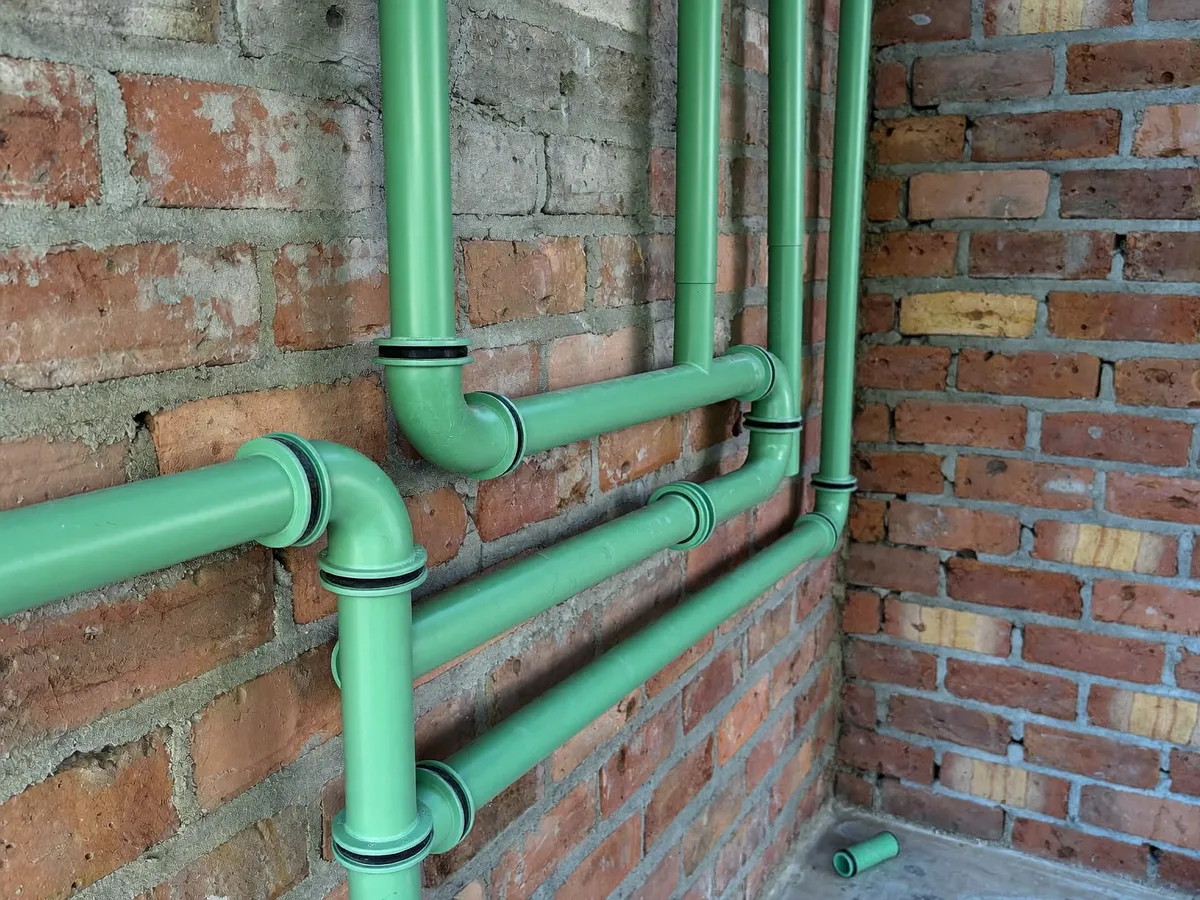
Once a client asked me why his villa kept having the same pipe problem every two years. When I looked at the installation — original 1990s build in Seminyak — the answer was clear: whoever installed the hot water lines used standard domestic PVC throughout. In Bali, where rooftop tank temperatures reach 45–50°C in the afternoon, standard PVC is simply the wrong material for hot supply lines. It deforms slowly under repeated thermal cycling, joints open up, and you get leaks that seem random but are entirely predictable if you know what the pipe was made from. Replacing with PPR throughout — one job, done properly — ended the two-year leak cycle for good.
Pipe Systems We Install in Bali
Hot Water Supply Lines (PPR)
PPR pipe is the correct material for Bali hot water systems — it handles continuous temperatures up to 95°C and the thermal cycling from solar storage tanks without joint creep. We use PPR-80 (PN20 rated) for all hot supply lines, with heat-fusion welded joints that are stronger than the pipe itself.
Typical applications: from water heater or solar tank to bathrooms and kitchen. All joints thermally welded — no push-fit or solvent connections on hot lines.
Cold Supply Lines (PVC / HDPE)
Standard uPVC-10 for cold indoor supply. HDPE for outdoor buried runs, garden irrigation and pool supply — HDPE resists soil chemicals and root intrusion significantly better than PVC in Bali's volcanic soil.
Pipe sizing: we calculate flow requirements based on the number of fixtures and pump output, not guessing. Undersized pipes are a common cause of poor pressure on upper floors in multi-storey villas.
Drainage & Waste Lines
Correct gradient is critical and frequently wrong in Bali renovations. Drain lines need a consistent fall of 1–2% to gravity drain without blockages. We set gradient with a level on every run — not by eye.
Vent stacks are also often absent in Bali villa renovations, causing slow draining and gurgling traps. Where access allows, we add vent connections to the existing stack.
New Construction Installation
New builds are the opportunity to install correctly from the start. We provide a pipe routing plan for the builder showing all supply, hot, cold and drain routes before walls are closed. This prevents the "I don't know where that pipe goes" problem that's endemic in Bali buildings.
We work alongside Indonesian construction teams and provide supervision for critical junction points where the builder's team handles straight runs.
Why Pipe Material Matters More in Bali Than Elsewhere
Three factors make Bali a more demanding environment for pipework than most of the places your plumber may have trained:
Solar water temperature. Most Bali villas use rooftop tank solar heating, either passive or active. Water temperature in these tanks hits 50°C+ on a clear afternoon and drops to 25°C overnight. Standard PVC is rated for temperatures up to 60°C but degrades faster under repeated thermal cycling than PPR, which handles the same cycling without stress.
Well water hardness. Deep well water in Bali has high dissolved mineral content — particularly calcium and silica. This causes scale buildup inside pipes over years, narrowing the effective bore and increasing pressure. On steel fittings, it causes corrosion from the inside. PPR and HDPE are entirely unaffected by water chemistry.
Soil chemistry. Bali's volcanic soil is mildly acidic and contains compounds that accelerate corrosion of galvanised steel and degrade the plasticisers in standard PVC. HDPE is inert to soil chemistry and the correct choice for any buried outdoor line.
Installation Process
Survey & Routing Plan
We visit the site, understand the water source (pump, tank, mains), required fixtures, and existing pipe routing. We produce a routing sketch showing the planned pipe runs before any work starts. This gets agreed before any cutting begins.
Material Selection & Quote
Based on the routing plan, we specify exact pipe sizes, materials and fittings. Quote provided in writing via WhatsApp. No surprises mid-job.
Installation
All PPR joints thermally welded. PVC joints solvent-welded with correct cure time before pressure. Drain lines set to gradient with level on every run. All penetrations through concrete sealed.
Pressure Test
Full system pressure test at 1.5× working pressure before walls are closed. Any joint failures found and repaired at this stage. You see the test result before we leave.
Documentation
WhatsApp photo report showing pipe routes before closing. This becomes your reference for any future work — so the next plumber knows exactly where the pipes run.
Common Questions
What pipe material is best for Bali villas?
PPR for hot water lines — handles thermal cycling from solar tanks far better than PVC. HDPE for garden and underground runs. Standard PVC is fine for cold indoor supply and drainage.
How long does pipe installation take in Bali?
A single bathroom: 4–8 hours. Full villa new supply lines: 1–3 days depending on size. We plan routing before starting to minimise wall cutting.
Do you install pipes in Bali villas under construction?
Yes. New construction is the best time to install correctly. We work alongside your contractor team and provide a layout plan for the builder's reference.
Can you replace old pipes without demolishing the whole wall?
Often yes — if the old pipe route allows access at key points, we can pull the old pipe and thread new through the same route. Where full replacement is needed, we plan the minimum cutting path.
Areas Covered
Need Pipes Installed or Replaced?
Tell us what you're working on — new build, renovation, or problem replacement — and we'll give you a clear plan and quote.
WhatsApp for a Quote